Unlocking the Full Potential of L&D: The Trusted Advisor Model

As workforce demographics shift, L&D teams have an important opportunity to move beyond reactive training delivery and become more strategic partners to the business. This article explores the Trusted Advisor model, showing how L&D can progress from subject matter expert to valuable resource and trusted advisor. It also looks at the practical capabilities that support this shift, including business understanding, consultative skills, data and analytics, stakeholder relationships and awareness of industry trends.
There's a change coming
Australia and New Zealand are poised to experience significant demographic changes in their workforce age composition in the coming decades. These transformations will have profound implications for organisations seeking to secure the talent they require.
As the population ages, a smaller pool of young individuals will be available for recruitment, making it increasingly challenging to fill roles, especially those demanding new skills. This situation calls for unprecedented efforts in training and skill development, as traditional tools and approaches may no longer suffice.
The need for Learning and Development (L&D) in this context is more critical than ever and the ability of organisations to address these challenges effectively will determine their relevance in the evolving job market.
While there are L&D professionals in various industries who comprehend and are actively addressing these challenges, the industry as a whole requires a proactive investment in training and development in itself to meet these needs. To truly unlock the value of learning at a strategic level, L&D must move from being reactive order-takers to strategic partners and influential leaders.
The Trusted Advisor model is one way to break this down into skillsets L&D can harness.
The Trusted Advisor Model
This model breaks down the different levels at which L&D professionals operate within an organisation and helps us understand how L&D teams can evolve from seen as subject matter experts to trusted partners that are an active and vital part of an organisation’s strategy.
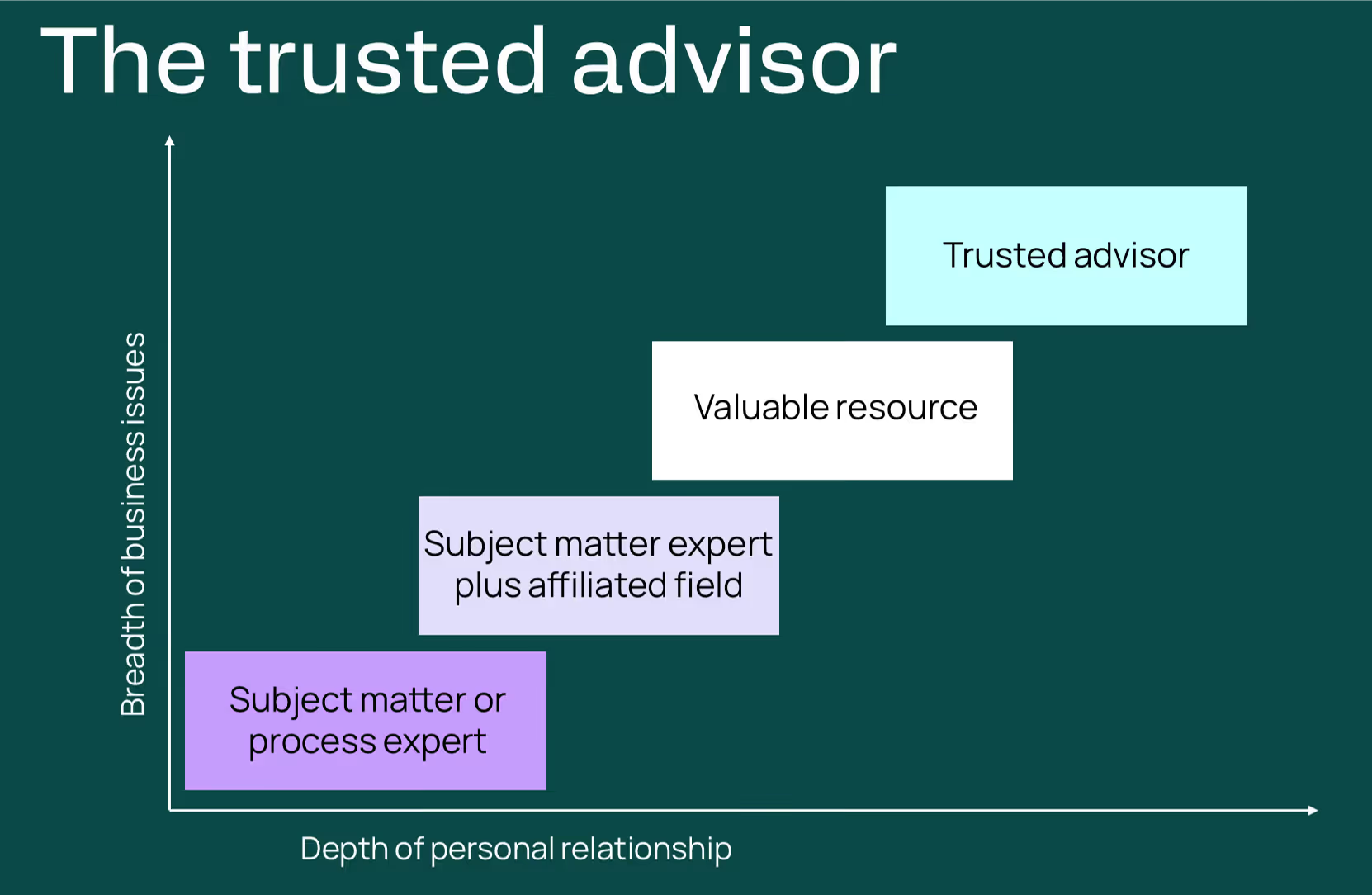
1. Subject matter or process expert
What this level looks like
At this level, L&D professionals are primarily focused on delivering training and development programs as requested by stakeholders.
How L&D behaves at this level
They respond to specific, often narrowly defined needs, such as creating a customer service training program for 50 employees.
What changes at the next level
Their role is transactional and tactical.
2. Subject matter expert plus affiliated field
What this level looks like
L&D specialists at this level begin to broaden their perspective. They not only address the immediate need but also consider the broader implications.
How L&D behaves at this level
For example, when asked about a training program, they may inquire about post-training support, coaching, and its impact on the workforce.
What changes at the next level
Their role becomes more consultative and forward-thinking.
3. Valuable Resource
What this level looks like
L&D professionals operating as valuable resources delve deeper into understanding the Organisation’s strategic goals and needs.
How L&D behaves at this level
They actively contribute to decision-making processes by offering insights and solutions that align with the Organisation’s long-term objectives.
What changes at the next level
They move from order fulfillment to providing strategic input.
4. Trusted Advisor
What this level looks like
At the highest level, L&D specialists act as trusted advisors to senior leaders and business unit managers.
How L&D behaves at this level
They participate in strategic discussions, helping shape the Organisation’s long-term vision and capabilities.
What this enables
L&D becomes an active and influential part of business strategy, helping leaders make stronger decisions about capability, performance and future workforce needs.
.avif)
Upskilling and Reframing L&D
The key takeaway from the Trusted Advisor Model is that for L&D teams to deliver optimal value, they must strive to operate at the ‘Valuable resource’ and ‘Trusted Advisor’ levels. Here are some strategies for achieving this transformation.
Understanding the business strategy
L&D professionals need a deep understanding of their organisation’s overarching business goals and the challenges it faces. This foundational knowledge forms the basis for their contributions. By aligning L&D initiatives with these objectives, they can play a more instrumental role in driving the company’s success.
Build consultative skills
L&D professionals also need to develop strong consultative skills, enabling them to ask pertinent questions and engage in meaningful discussions with stakeholders. This approach empowers them to offer valuable insights and address both immediate and long-term organisational needs.
Use data and anayltics
The integration of data and analytics is crucial for L&D teams to make informed decisions. Leveraging data allows them to validate the impact of their initiatives, quantify the value they bring to the organisation and create clearer visibility of progress over time.
For L&D teams, this means looking beyond attendance and completion data to understand whether learning is being applied, which behaviours are changing and where capability is improving in the flow of work.
Strengthen stakeholder relationships
Equally important is the aspect of relationship-building. L&D professionals must establish strong connections with key stakeholders, business leaders, and decision-makers. Trust is the bedrock of this advisory role, and it is nurtured through effective communication and collaborative efforts.
Stay close to industry trends
Lastly, L&D professionals should remain proactive in keeping abreast of industry trends and adopting best practices. This ongoing learning process ensures that they stay at the forefront of innovation, thereby ensuring their continued relevance and effectiveness in supporting their Organisations.
To unlock this potential, L&D professionals need to embrace the Trusted Advisor model and work towards becoming valuable resources and trusted advisors. By understanding business strategy, developing consultative skills, using data to show impact and strengthening stakeholder relationships, L&D teams can upskill and reframe their approach, ultimately adding more significant strategic value to their organisations.
Connect learning to better customer conversations
For L&D teams, the real value comes when learning shows up in day-to-day behaviour. See how YakTrak helps organisations define the micro-behaviours behind great customer conversations, support leaders to coach them, and track progress over time. Explore customer conversations
Ready to Start Your Pathway?
Ready to move from ideas to results? Pick a quick demo to see workflows, or a discovery call to discuss your challenges. We’ll tailor the pathway.