Business development and lead generation
Help your teams create more opportunities by turning business development into clear behaviours, simple routines, and feedback that builds confidence.

Today, lead generation feels harder than ever. Buyers avoid generic outreach, teams are overloaded, and compliance expectations are rising.
Most organisations respond by asking people to do more business development. But when expectations are unclear and good business development behaviours aren't defined, activity becomes inconsistent, confidence drops, and pipeline performance becomes difficult to predict.
Your people don't need more pressure. They need clarity, practice, and support.
Our approach builds consistent, high-quality top-of-funnel activity, stronger early-stage conversations, and a healthier, more predictable pipeline.
Why lead generation stalls
Lead generation becomes inconsistent when people are expected to create opportunities but aren't given a clear definition of what good business development looks like.
Without clear behaviours, people default to what's comfortable. Outreach becomes inconsistent, follow-up varies, opportunities are missed, and pipeline performance becomes difficult to predict.
Common challenges:
- Lead flow swings between busy and quiet
- Performance depends on a few “naturals”
- Outreach happens only when everything else is done
- Leaders talk about business development but don’t know how to coach it
- Pipeline forecasting lacks confidence
This creates missed opportunities, uneven performance and a pipeline that feels harder to influence than it should be.

The real blocker: behaviours aren’t defined
Most organisations want more business development activity, but never clearly define the behaviours that create quality opportunities.
Capability is described in broad terms, while the actions that drive results remain open to interpretation. As a result, business development becomes highly individual. Some people succeed through experience or confidence, while others avoid it because they're unsure what good looks like.
Sustainable improvement happens when business development is translated into clear, observable behaviours that can be practised, reinforced and coached.
Examples of effective business development behaviours:
- Clearly communicates their unique value proposition
- Understands the benefits they create for referral partners
- Identifies and prioritises high-value opportunities
- Consistently asks for meaningful next steps
- Captures insights that improve future conversations
Small actions, repeated. That’s what shifts results.
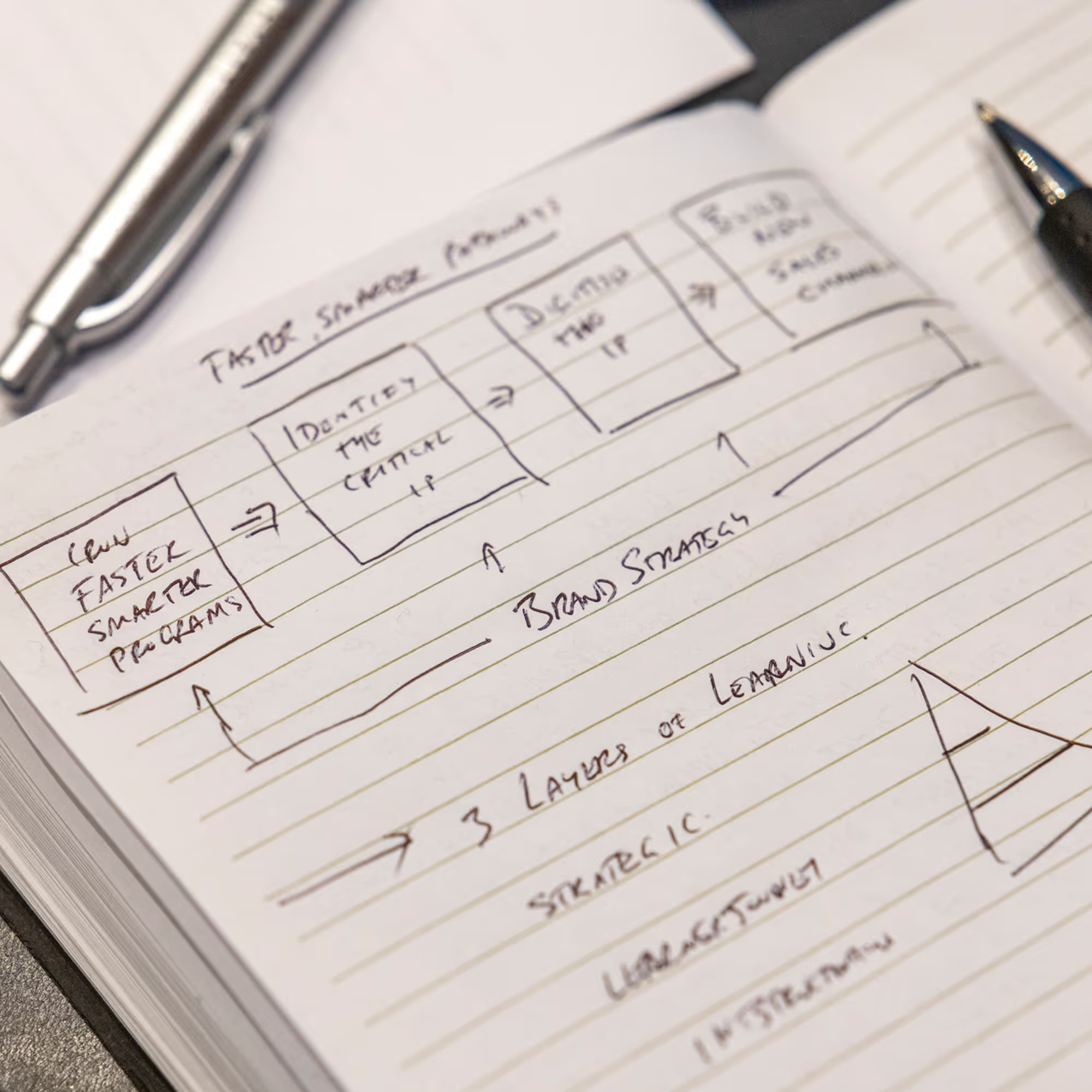
Our approach: Learn → Practise → Feedback
Behavioural change that fits into real work, not around it.
We work with you to create a short, plain-English lead generation playbook.
You receive:
- A behaviour checklist (8–12 observable business development actions)
- A conversation pattern (Identify → Prepare → Connect → Confirm next step → Follow-up)
- Quality markers so everyone knows the standard
What changes in Week 1: People stop guessing. Leaders and teams speak the same language.
Consistency beats intensity. We create a simple weekly routine that fits the real world.
You receive:
- A 1-page weekly rhythm (business development blocks, follow-up time, team huddle)
- A lead source planner
- A simple tracking view that takes minutes, not hours
What changes in Week 2: Teams block time, follow up faster, and spend less time deciding what to do next.
People improve when feedback is:
- Fast
- Specific
- About behaviour, not judgement
Two ways to run this:
- Option A: Consulting-only
We build the behaviours, rhythm, and leader coaching habits using tools your team already has. - Option B: Consulting + platform
We add our SaaS paltform to make practice and coaching easier to see, track, and improve at scale.
If you choose Option B, our platform helps leaders see:
- What actions people are practising
- What’s improving
- Where support is needed
- How behaviour links to pipeline outcomes
What changes in Week 3–4: Leaders coach the right things. Teams practise more. Momentum builds.

What this looks like in real teams
A business lending team introduced a clear business development behaviour set and a simple weekly rhythm.
Three-month outcomes:
- 55% uplift in key business development activities (e.g., qualified conversations, agreed next steps, follow-ups completed)
- 67% uplift in new business enquiries (qualified inbound plus outbound responses)
Frontline teams applied a “local connections” rhythm to generate new opportunities through community partnerships.
Outcome: steady month-on-month growth in self-generated leads, plus more consistent follow-up across relationship teams.
Consultants used behaviour checklists and weekly practice to strengthen conversations and follow-up.
Outcome: more introductions, shorter delays between first contact and next step, clearer early-stage opportunities.
Note: Results vary by context. Metrics and definitions are confirmed in discovery.

What you get
A complete, practical system your leaders and teams can use immediately.
Core deliverables:
Lead generation playbook (behaviours, examples, patterns)
Business development micro-behaviour checklist
Weekly business development rhythm template
Leader coaching prompts
Follow-up rules and quality markers
Implementation scorecard
Optional (high value):
Visibility workflow to make business development actions easier to track
AI-supported call or conversation insights
Manager enablement sessions
Is this right for you?
Perfect if you want to:
- Grow quality top-of-funnel activity
- Make business development consistent across teams
- Support people who avoid outreach
- Reduce reliance on inbound or referrals
- Improve forecasting confidence
- Build habits that survive busy weeks
Not ideal if:
- You want a one-off motivational workshop
- Leaders can’t commit to a short weekly check-in
- You want volume without quality

Frequently asked questions
Got questions? These FAQs explain what YakTrak is, how it fits, and the outcomes to expect so you can choose the right pathway with confidence.
Not always.
Start with Platform if behaviours/frameworks are defined and you need execution, visibility and evidence.
Start with Consulting if "what great looks like" needs clarifying or your context requires bespoke design.
Choose Both for the fastest path in complex rollouts.
Let’s make business development easier, clearer, and more consistent
If you want a simple system that helps your team generate leads they’re proud of, not heroic and not pushy, we can help.
First step: a 45 minute scoping call to map your current rhythm, identify the few behaviours that matter, and recommend the simplest starting point.