Practice makes perfect, but is all practice created equal?

Practice is essential for building skill, but not all practice has the same value. This article explores the difference between reviewing information and applying skills through deliberate practice. It explains why effective practice should be specific, challenging and supported by ongoing assessment or feedback. Using examples like exam preparation, language learning and music, it shows how small, repeated practice loops can help people build confidence, improve performance and move steadily towards mastery.
Why practice alone is not enough
Practice and application are essential to building skill, but not all practice has the same value.
Most people would agree that practice matters. But two questions are worth asking: is all practice of equal value? And what kind of practice is most effective?
Let’s say you were studying for an exam. As part of that study, you might re-watch a video or refresh your reading. While this may help you retain knowledge, going over your notes or revisiting theory is not the same as application and practice.
To build your skill, you need to practise old exam questions or re-write your old answers, not just re-read them.
It is the same with any skill. Proficiency is built through doing, not just reading or thinking. Putting practice into action is one of the clearest ways to build mastery.
So, back to the question: is all practice of equal value?
The answer is no. There are a couple of key things to consider that will help you know whether it is good quality practice:
- the practice is challenging
- there is ongoing assessment or feedback

What is deliberate practice?
Deliberate practice is strongly associated with the work of psychologist Anders Ericsson. It uses repetition and successive refinements to improve a specific skill and enhance performance.
Deliberate practice is a type of training where someone practises a skill in a way that challenges them just beyond their current ability. This is often referred to as their zone of proximal development.
This means you, and your coach if you have one, need to decide which skill you are working on and what level you need to perform it at. That way, you can tailor your practice session to push yourself just a little further.
Most elite performers follow a “challenging but not overwhelming” training principle. This means not worrying too much about the end outcome. Instead, the focus is on getting a little better every time you practise.
Think about it like learning a new language or playing a musical instrument. You do not go straight to playing a piano concerto. You start with easier pieces and steadily make small improvements.
Good practice should be small enough that it does not feel overwhelming, but challenging enough that it stretches you. It should make you feel safe to try, win, fail and improve.
There is no shortcut. You have to do the reps.
Why feedback matters
Deliberate practice also involves ongoing assessment. This could take many forms. It might be self-assessing against a proven framework or standard, or receiving close mentoring or feedback from an expert.
This is another reason for keeping your practice specific and small. When the behaviour you are practising is clear, it becomes easier to assess. You can see it, hear it, measure it and improve it.
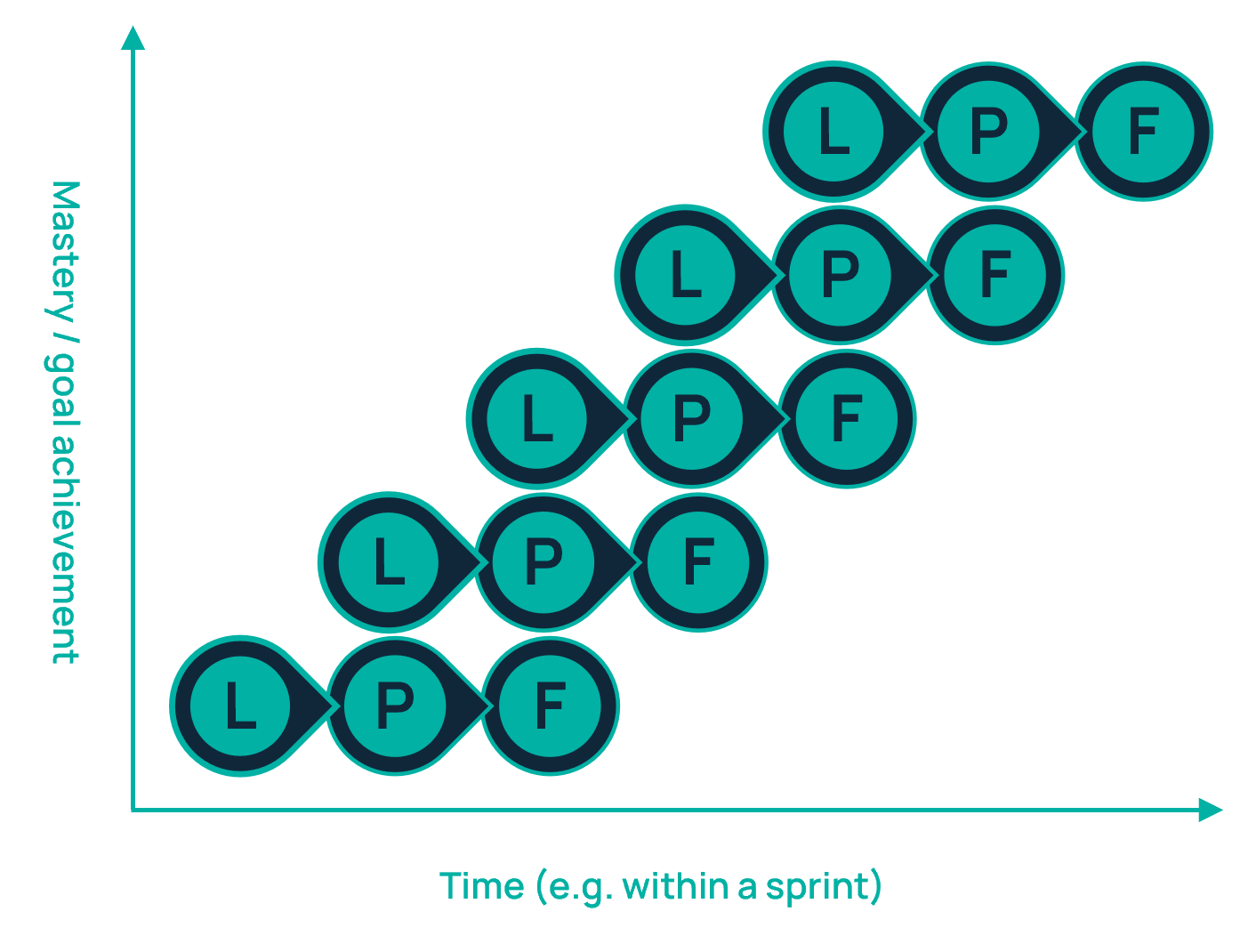
At YakTrak, we think about deliberate practice as a Learn, Practice, Feedback loop. Repeated over and over again, these small loops help people build skill consistently and embed improvement over time.
Conclusion
So next time you are looking to build your own skill, or coach someone else to build theirs, think carefully about how and when you will practise it.
Also think about how you will know whether that practice is effective.
Deliberate practice is a powerful skill in itself to master. By keeping practice small but challenging, and assessing progress as you go, you create a clearer pathway to improvement.
Make practice easier to track
Explore how YakTrak helps leaders set clear goals, support regular coaching and make progress easier to verify.
Ready to Start Your Pathway?
Ready to move from ideas to results? Pick a quick demo to see workflows, or a discovery call to discuss your challenges. We’ll tailor the pathway.