From routine to results: designing a high-performance operating rhythm

A regular operating rhythm can help large organisations stay aligned, but only when it is designed with purpose. This article explores how to move beyond tick-the-box meetings and create a high-performance operating rhythm that supports coaching, accountability, behaviour change and measurable outcomes. It looks at the principles that make rhythms effective, including simplicity, empowered leadership, visibility and clear intent, and shows why operating rhythms work best when they connect everyday activity to strategic goals.
When routine starts creating noise, not progress
Large organisations often establish a regular operating rhythm of meetings, check-ins and reviews to keep teams aligned. Yet without thoughtful design, these routines can degrade into robotic, tick-the-box exercises that add busyness without improving performance.
By contrast, high-performing teams use a deliberate cadence of activities aimed at continuous improvement. Their success is rarely accidental. It is often the result of disciplined rhythms focused on the behaviours that drive meaningful outcomes.
In other words, the right operating rhythm can be a powerful engine for performance and culture, not just a calendar of meetings.
How can an organisation design and embed a new operating rhythm that truly drives high performance?
It starts with clear principles and a practical approach. The most effective rhythms are built on:
- clear purpose
- simple execution
- empowered leadership
- visibility and accountability
Every activity in the cadence should serve a well-defined intent. This keeps the focus on outcomes that matter, rather than process for the sake of process.

The framework also needs to be simple and streamlined, so leaders can focus on coaching and results, not cumbersome administration. This makes it easier for teams to adopt the rhythm at scale.
At the same time, leaders need autonomy to adapt how they execute the rhythm within their context. Giving teams ownership in how they meet the intent of each activity helps build deeper engagement and sustained effort.
Finally, visibility and accountability mechanisms are crucial. By tracking both the frequency and quality of leadership activities, the organisation can see whether the new rhythm is alive and delivering on its purpose, rather than fading into checkbox compliance.
Embedding the rhythm through leadership and change
Implementing a performance rhythm is not just an operational change. It is a leadership and culture initiative.
It requires equipping leaders with new skills and mindsets so they can champion the rhythm. In practice, this means investing in leadership development and coaching to build capabilities such as effective feedback, coaching for performance and data-driven decision-making.
It also means applying change management techniques: communicating the reason behind the new rhythm, building belief in the change and creating early wins that build confidence in the new way of working.
YakTrak consulting can play a practical role in this process, from facilitating interactive workshops and working alongside managers as they practise new routines, to helping leaders apply the rhythm in ways that support real performance outcomes.
Done right, a well-designed operating rhythm becomes the backbone of a high-performance culture. It keeps teams focused on what matters, builds consistent coaching and feedback, and supports measurable improvements in key business metrics like customer satisfaction, growth and productivity.
Principles of a high-performance operating rhythm
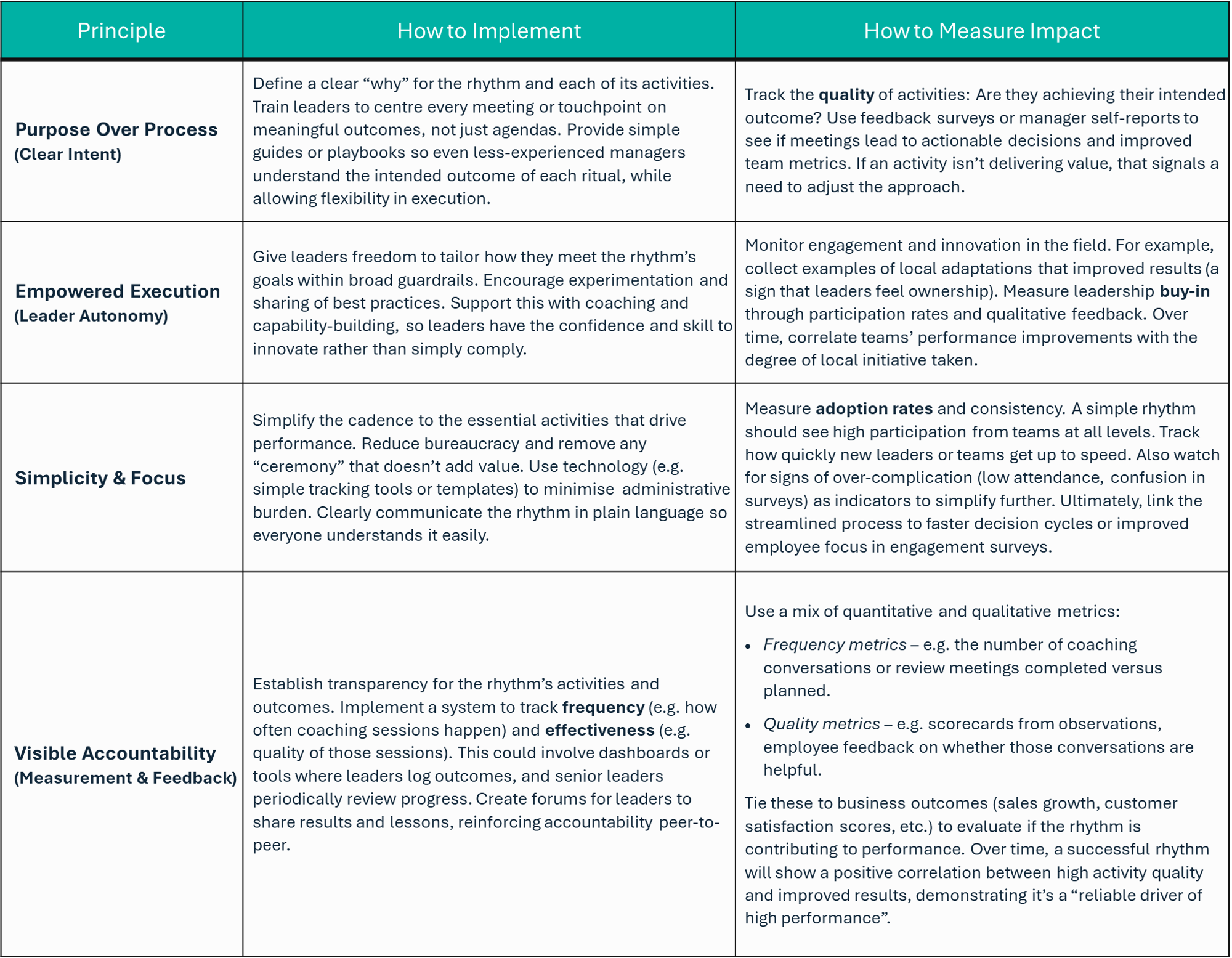
To illustrate these ideas, the table below outlines key principles of a high-performance operating rhythm, along with practical implementation strategies and how to measure success for each.
Conclusion
Designing and embedding a new operating rhythm is a multifaceted effort. It is part process design, part leadership development and part cultural change.
It works best when there is a clear sense of purpose, simple execution, empowered people and consistent measurement. When these elements come together, an operating rhythm becomes far more than a schedule of meetings. It becomes a strategic asset.
It creates an environment where leaders coach their teams towards continuous improvement, everyone understands how day-to-day actions connect to strategic goals, and progress is tangible and tracked.
This kind of rhythm can drive real results, from more engaged employees to better customer outcomes, and sustain them by building high-performance habits into the fabric of the organisation.
By following these principles, and with experienced guidance in facilitation and change management, large organisations can find their beat and make a new operating rhythm a lasting engine for performance.
It is about turning routine into results and ensuring that the way “we do things around here” consistently brings out the best in people and the business.
Build an operating rhythm that turns routine into results
Explore how YakTrak helps leaders create the focus, coaching rhythm and accountability needed to improve performance over time.
Ready to Start Your Pathway?
Ready to move from ideas to results? Pick a quick demo to see workflows, or a discovery call to discuss your challenges. We’ll tailor the pathway.