Consistency creates confidence: The hidden advantage of high-performing teams

The highest-performing teams are rarely doing completely different things. More often, they're applying a small number of important behaviours with greater consistency, supported by coaching, practice commitments and ongoing reinforcement. The article explores why performance gaps are often behavioural rather than capability-based, how confidence tends to follow repeated application, and why leaders who make behaviours visible in everyday conversations create more sustainable performance outcomes.
Most teams are closer than they think
Every year, when we review the results of customer conversation assessments, the discussion inevitably turns to what separated the stronger-performing teams from the rest of the field. Many leaders expect the answer to involve capability. They assume the top-performing teams have access to better training, more experienced consultants or a fundamentally different approach to serving customers.
What we typically find is far more encouraging. The difference is rarely that strong performers are doing completely different things. More often, they are demonstrating a handful of important behaviours more consistently. Whether we're looking at sales conversations, service interactions or coaching discussions, the strongest performers usually aren't inventing new techniques. They're reliably executing the behaviours that most organisations already recognise as important.
The challenge is rarely knowing what good looks like
One of the reasons behavioural change can be frustrating for leaders is that awareness is often mistaken for adoption. Teams attend training. Expectations are communicated. People can describe what a good conversation should sound like. Yet when we listen to real interactions, those behaviours appear inconsistently.
Discovery questions are a good example. Most people understand the value of exploring a customer's situation before providing are commendation. In practice, however, some consultants do it every time, while others revert to solving the problem as quickly as possible. The difference is rarely a lack of understanding. The behaviour simply hasn't become part of their normal routine.
This distinction matters because it changes the way we approach improvement. If people don't know what to do, the answer is often education. If people know what to do but aren't doing it consistently, the answer is reinforcement, practice and coaching.
Why leaders often misdiagnose the problem
When performance isn't where leaders want it to be, capability and confidence are common explanations. We hear comments such as, "They need to ask better questions," or "They're not comfortable exploring customer needs," or "They seem hesitant in certain conversations."
Sometimes those observations are accurate. However, when we examine the conversations themselves, we usually uncover something much more specific. The consultant might be moving to a recommendation too quickly. They may not be setting expectations at the beginning of the interaction. They might be missing opportunities to keep the customer informed. These are observable behaviours, which means they can be practised, measured and coached.
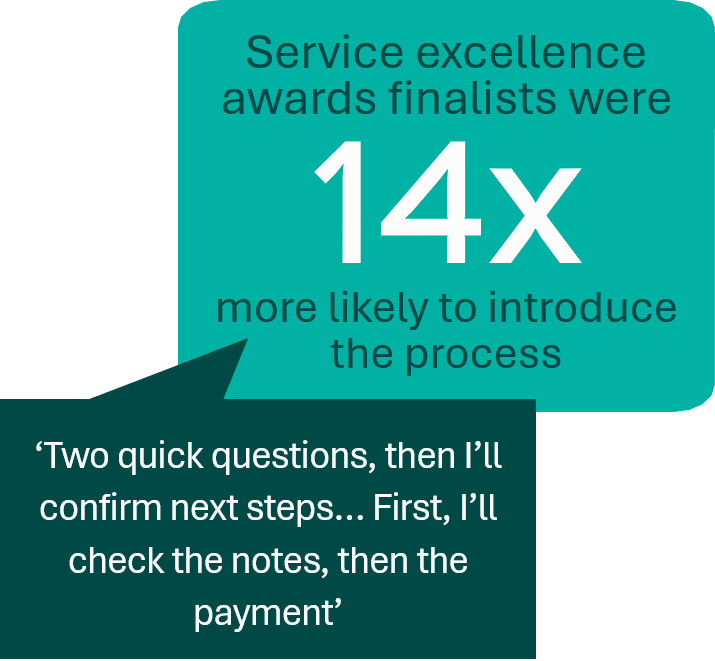
This is one of the reasons YakTrak has always focused on behaviours rather than personalities or traits. Leaders can do very little with feedback such as "be more confident." They can do a great deal with feedback such as "introduce the process earlier" or "expand on the customer's situation before making a recommendation."
Confidence follows behaviour
One of the most common misconceptions in performance improvement is that confidence comes first. In reality, confidence is often an outcome of repeated success.
Think about a consultant who consistently explains the process at the start of every conversation. Over time, they develop a rhythm. They know how customers respond. They know which language works and which doesn't. Eventually, they sound confident. Not because they attended a confidence workshop, but because repeated practice made the behaviour feel natural.
The same principle applies across almost every area of performance. People become more confident asking discovery questions by asking discovery questions. They become more confident discussing customer needs by discussing customer needs. Confidence grows when important behaviours are repeated often enough to become habit.
What high-performing leaders do differently
The strongest leaders we've worked with tend to spend less time talking about behaviours in theory and more time making them visible in practice. They listen to real customer conversations, identify examples of effective behaviours and use them as coaching opportunities. Rather than treating performance as something that is reviewed after the fact, they focus on understanding what happened within the conversation to create the outcome.
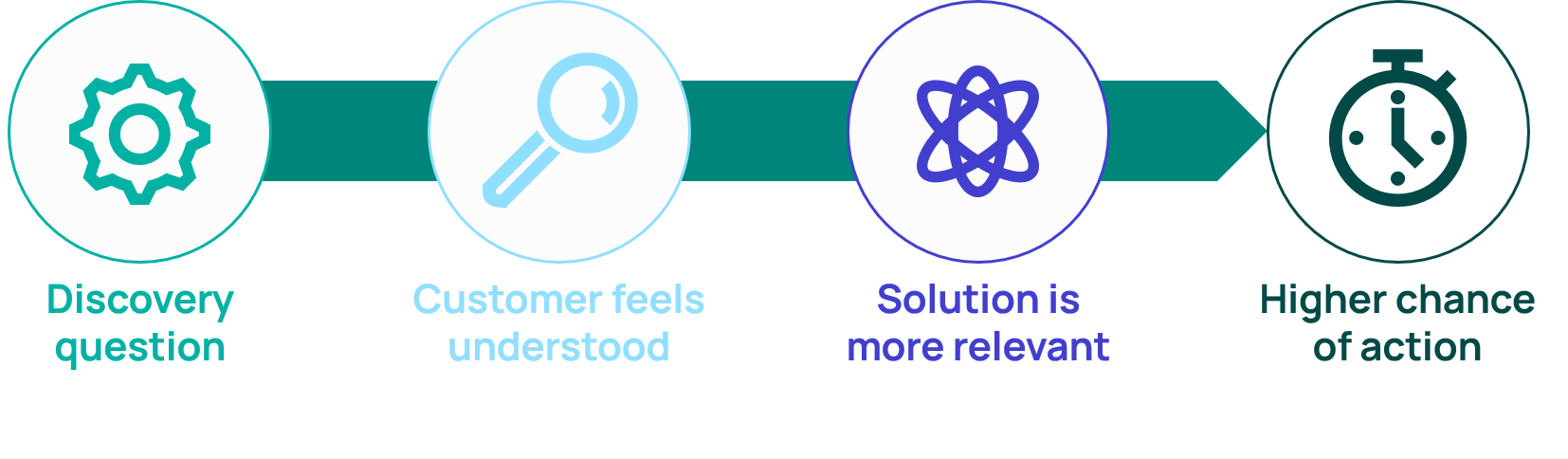
They regularly listen to customer interactions. They highlight examples of effective behaviours and help team members understand the impact those behaviours had on the conversation. Rather than simply pointing out that a customer responded positively or a recommendation landed well, they draw a clear link between the action and the outcome. A well-timed discovery question led to a more tailored solution. Keeping the customer informed reduced uncertainty and increased engagement. Taking time to explore secondary needs uncovered additional opportunities that would otherwise have been missed. Most importantly, they keep bringing attention back to those behaviours long after formal training has finished.
This is often where consistency is built. Not because people are repeatedly told what good looks like, but because they begin to understand why those behaviours matter. Over time, they stop seeing behaviours as a checklist and start recognising them as the actions that create better customer and business outcomes.

A practical question for leaders
If you're looking for opportunities within your own team, a useful question is not, "What are our best people doing?" It's, "Which behaviours are our best people doing consistently that everybody else is only doing occasionally?"
That question tends to shift the conversation away from talent and towards opportunity. It helps leaders identify behaviours that already exist within the team and focus on increasing their frequency. In our experience, that's where some of the most meaningful improvements occur.
Most teams are not as far away from high performance as they assume. In almost every team, there are examples of great discovery, strong customer education, effective expectation setting and clear recommendations already occurring. The opportunity is rarely to invent something entirely new. It's to make the important things happen more often.
Because when behaviours become consistent, confidence tends to follow. And when confidence spreads across an entire team, performance becomes much easier to sustain.
Curious what behaviours are creating the biggest performance differences right now?
Join us for the Auscontact Sales & Service Excellence Awards Insights webinar, where we'll unpack the behavioural patterns emerging from this year's assessments, explore what separated the strongest-performing teams, and discuss the practical actions leaders can take to build greater consistency across their own teams.
Register for this years insights webinar here
Frequently asked questions
Got questions? These FAQs explain what YakTrak is, how it fits, and the outcomes to expect so you can choose the right pathway with confidence.
The article suggests that the difference is rarely a completely different approach. Higher-performing teams tend to apply a small set of important behaviours more consistently. The gap is usually found in frequency and quality of execution rather than awareness or knowledge.
Many people can describe what good performance looks like after training, but that doesn't mean the behaviour becomes part of their daily routine. Sustainable improvement typically comes from reinforcement, practice, coaching and repeated application over time.
Rather than focusing on broad concepts such as confidence or capability, leaders can review real conversations and look for observable behaviours. Specific actions such as setting expectations, exploring customer needs or keeping customers informed are easier to measure and coach.
The article argues that confidence is often an outcome rather than a starting point. As people repeatedly apply important behaviours and experience positive outcomes, those behaviours become more natural, which can increase confidence over time.
Leaders can focus on behaviours already linked to positive customer outcomes within their own team. Examples from the article include asking discovery questions, setting expectations, exploring customer needs and providing clear recommendations.
High-performing leaders continue coaching after formal learning has finished. They listen to customer conversations, highlight effective behaviours, explain why those behaviours matter and regularly reinforce expectations through consistent coaching rhythms.
Progress can be measured by observing whether targeted behaviours are occurring more consistently over time. Because these behaviours are visible and specific, leaders can review conversations, coach against them and track improvements in application and consistency.
Ready to Start Your Pathway?
Ready to move from ideas to results? Pick a quick demo to see workflows, or a discovery call to discuss your challenges. We’ll tailor the pathway.