Call centre coaching that improves AHT, FCR and retention

Effective contact centre coaching depends on clear behaviours, consistent rhythm and evidence that shows whether practice is changing performance. Here, we look at why coaching often stalls, then outline seven practical steps leaders can use to make coaching more focused and measurable.
The blog explains how micro-behaviours, ACDC coaching, operating rhythms, verification and behavioural data help connect coaching effort to AHT, FCR and retention. The practical takeaway is that coaching works best when it is specific, repeatable and reviewed on real calls.
The problem
You run refreshers and share tips, yet results vary by team and leader. Goals are vague. Coaching slips when queues spike. It is hard to prove what changed. You need visibility, transparency and accountability so coaching time turns into better conversations and measurable improvements in AHT, FCR and retention.
Why coaching stalls in contact centres
Coaching tends to stall when it is too broad, too ad hoc or disconnected from evidence.
- Goals say “handle objections better” without examples of what good sounds like.
- Leaders coach inconsistently and skip verification.
- Notes sit in spreadsheets and emails with no shared visibility.
- Success is judged by opinion, not adoption and quality on live calls.
YakTrak’s integrated approach
We combine behavioural method with the YakTrak performance enablement platform so leaders can run coaching that sticks.
- Translate skills into micro‑behaviours
Keep actions short and testable by call type. Example: mirror the customer’s aim, state value before price, ask one confirm question, agree the next step. - Coach with ACDC
Agenda, Current state, Desired state, Commitment. One behaviour per session. Leaders capture a practice commitment and verify it on tagged calls. - YakTrak-powered AI
Prompts tighten goal quality, summarise coaching and highlight patterns by behaviour, queue and leader so action is based on evidence. - Operating rhythm built in
Weekly focus, daily huddles and two coaching blocks per rep. YakTrak tracks cadence and nudges leaders who fall behind, reducing mental load and keeping the rhythm stable. - Evidence that stands up
Coaching logs, owners, timestamps and call clips provide a clean record of who acted, what changed and when. Audit trails and role-based access support regulated environments.

The 7 steps for effective contact centre coaching
- Choose one behaviour
Tie it to AHT, FCR or retention. Keep it observable in 10–20 seconds of audio. - Find a quick example
Use a recent clip or call ID. Describe what happened in plain language. - Show what good sounds like
Keep it tight: “state value first, then price, then check for questions.” - Practise once
Role play briefly, then move to real calls the same day. - Set a commitment
One action the agent will demonstrate this week on two calls. Record it in YakTrak. - Verify on calls
Tag calls and review adoption and quality. - Review and repeat
Close the loop in Friday review. Keep or change the behaviour for next week.
Coaching techniques and when to use them
- Directive coaching for controls
Use when a must-do step is missing, like a disclosure. Provide the exact line, model it and verify two examples. - Guided discovery for skill growth
Help the agent self-diagnose: “What was the customer’s aim?” “Where did we confirm next steps?” - Role play for tricky moments
Practise the line, then move to live calls. Verify two clips. - On-floor nudges
Use a 30‑second clip in huddles. Ask who will try it next. - Peer examples
Capture strong calls. Tag by theme so leaders can reuse them.
An operating rhythm that protects coaching time
Coaching only works when the rhythm holds, even in busy weeks.
- Monday focus (15 mins): choose behaviours and share clips.
- Daily huddles (10 mins): win, focus, barrier, one action.
- Coaching blocks (2 × 20 mins/rep): one behaviour per session with scheduled verification.
- Friday review (20 mins): close or iterate goals and share examples.
YakTrak tracks cadence and prompts leaders so improvement stays on course.
Explore operating rhythms more here.
From behaviours to AHT, FCR and retention
Behavioural data should sit next to the scorecard so leaders can see which behaviours are linked to movement in the numbers.
- AHT
Better diagnosis and clear next steps reduce detours and dead time. - FCR
Confirm aim, explain options and agree next steps to cut repeat contacts. - Retention
Fair solutions and proactive updates reduce complaint drivers.
This is how we create faster, smarter pathways from coaching time to measurable performance.
Curious which behaviour will move your metric fastest by queue? Book a demo and we'll help you narrow it down
Coaching scenarios and examples
Objection handling on quotes
- Behaviour: state value before price; ask one confirm question; offer two options.
- Verification: two tagged calls.
- Metric link: conversion, AHT stability.
Complaint calls
- Behaviour: mirror aim; explain options and consequences; set timeframe.
- Verification: clip and note with timestamp.
- Metric link: FCR, retention.
Vulnerable customers
- Behaviour: identify cues; slow down; offer channel choice; confirm understanding.
- Verification: checklist on tagged calls.
- Metric link: retention, compliance exceptions.
Dashboards leaders actually use
- Adoption vs quality
See where agents attempt the behaviour and where quality needs work. - Leader consistency
Compare cadence and goal quality by leader. Share examples to lift the standard. - Outcome linkage
Track movement in AHT and FCR next to behaviour trends to focus coaching where it matters.
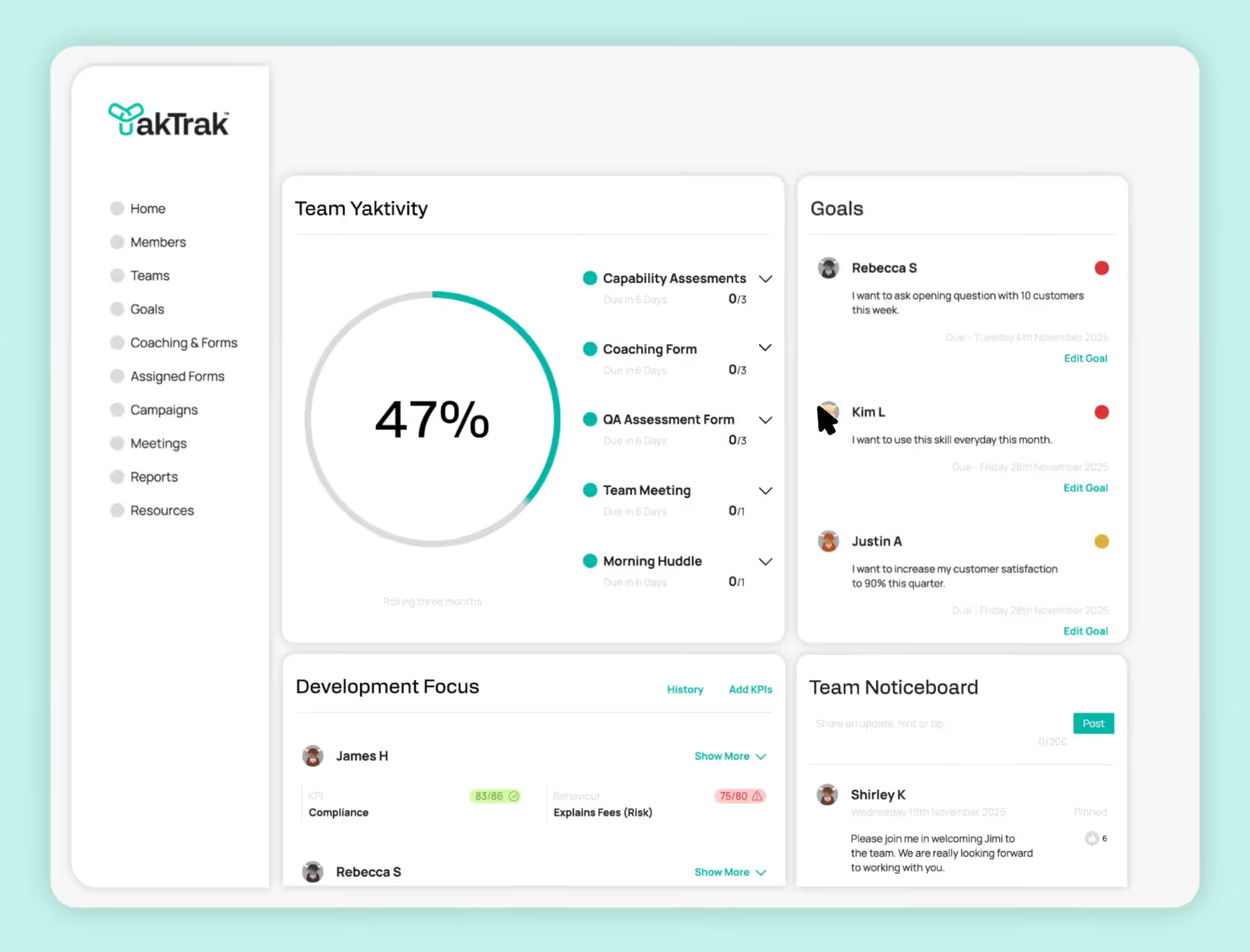
What makes YakTrak different
- System of application
Micro‑behaviours and operating rhythms embedded, tracked and improved in one platform. - Detection to resolution
QA findings feed coaching cases with verification and progress visibility. - Leader-first enablement
Prompts, examples and simple views help leaders coach inside their day. - Line of sight to outcomes
Behavioural data sits next to AHT, FCR and retention so leaders can see clearer links between behaviours and outcomes. - ISO certified
security, privacy, audit trails, SSO and APIs support governance at scale.
Ready to turn coaching time into measurable results?
Book a demo to see how ACDC, operating rhythms and YakTrak-powered reinforcement could work on your floor.
Frequently asked questions
Got questions? These FAQs explain what YakTrak is, how it fits, and the outcomes to expect so you can choose the right pathway with confidence.
Coaching works best when leaders focus on one observable behaviour at a time, verify it on real calls and review progress weekly. This keeps practice specific and consistent, making it easier to link behaviour changes to AHT, FCR or retention outcomes.
Micro behaviours are short, repeatable actions---such as "mirror the customer's aim" or "confirm next steps"---that you can hear in 10--20 seconds of audio. Because they are observable, leaders can coach them precisely and verify examples instead of relying on subjective opinions.
ACDC gives leaders a simple structure---Agenda, Current state, Desired state, Commitment---so each session focuses on one behaviour and a small practice commitment. It helps teams coach short and often while keeping a clean record of commitments and evidence.
YakTrak reduces mental load by guiding note quality, tracking cadence and surfacing patterns from calls and coaching notes. Leaders can see who they have coached, on which behaviour and what still needs verification---all without side spreadsheets.
Leaders tag call IDs, review short clips and score adoption and quality. Verification looks for whether the behaviour was audible and met the agreed standard. This evidence makes progress visible for leaders, QA and agents.
Most teams use Monday priorities, daily huddles, two ACDC blocks per rep and a Friday review. This rhythm helps maintain focus, frequency and quality---even when queues spike or priorities shift.
Behavioural data sits next to these metrics for the same call types. When adoption rises and AHT stabilises, FCR improves or retention strengthens, leaders can see which behaviours made the difference and adjust the next week's focus.
Ready to Start Your Pathway?
Ready to move from ideas to results? Pick a quick demo to see workflows, or a discovery call to discuss your challenges. We’ll tailor the pathway.