Build vs buy: a pragmatic guide for coaching and performance enablement

Build versus buy decisions are not just about tools. They are about whether your approach can create measurable behaviour change with the right security, integrations and time-to-value. Here, we look at what it takes to build or buy a performance enablement platform, including behaviour definitions, coaching cadence, goal quality, auditability and outcome reporting.
The piece also explains where internal builds often stall, and how leaders can assess the path that best supports conversion, retention and compliance.
Choosing the right path for performance enablement
If you’re weighing up whether to build your own coaching and enablement tools or buy a platform, you’re not alone. Many CTOs, GM Ops and L&D leaders start with the same question: couldn’t we configure our existing stack and add a few workflows? You could. The better question is whether that path will deliver measurable behaviour change with security, integrations and time-to-value that stand up to scrutiny.
What “build” and “buy” really mean
Build means orchestrating point tools (forms, tasks, BI, note-taking, QA, ticketing) into a home-grown workflow for goals, coaching and reporting. You own configuration and change management.
Buy means adopting a performance enablement platform that already bakes in the hard parts: translating insights into coachable micro-behaviours, setting clear goals, scheduling leader cadence, capturing high-quality coaching notes, and proving behaviour change over time. YakTrak adds enterprise security, APIs and a data model designed for behaviour and outcome analytics.
Decision framework: start with the mechanism, not the promise
Most internal proposals promise outcomes like higher conversion or retention. The mechanism that gets you there is what matters:
- Define behaviours. Translate outcomes into observable micro-behaviours and goal quality standards.
- Embed cadence. Put coaching and one-to-ones on a reliable rhythm with nudges and agendas.
- Coach with structure. Use guided prompts and good note capture so leaders coach consistently.
- Practice in live work. Turn goals into short experiments with quick re-checks.
- Prove change. Link behaviours to outcomes so you can see impact on conversion, retention and compliance.
YakTrak operationalises this mechanism with YakTrak-powered AI suggestions, governance and reporting, giving teams visibility, transparency and accountability across the full loop.
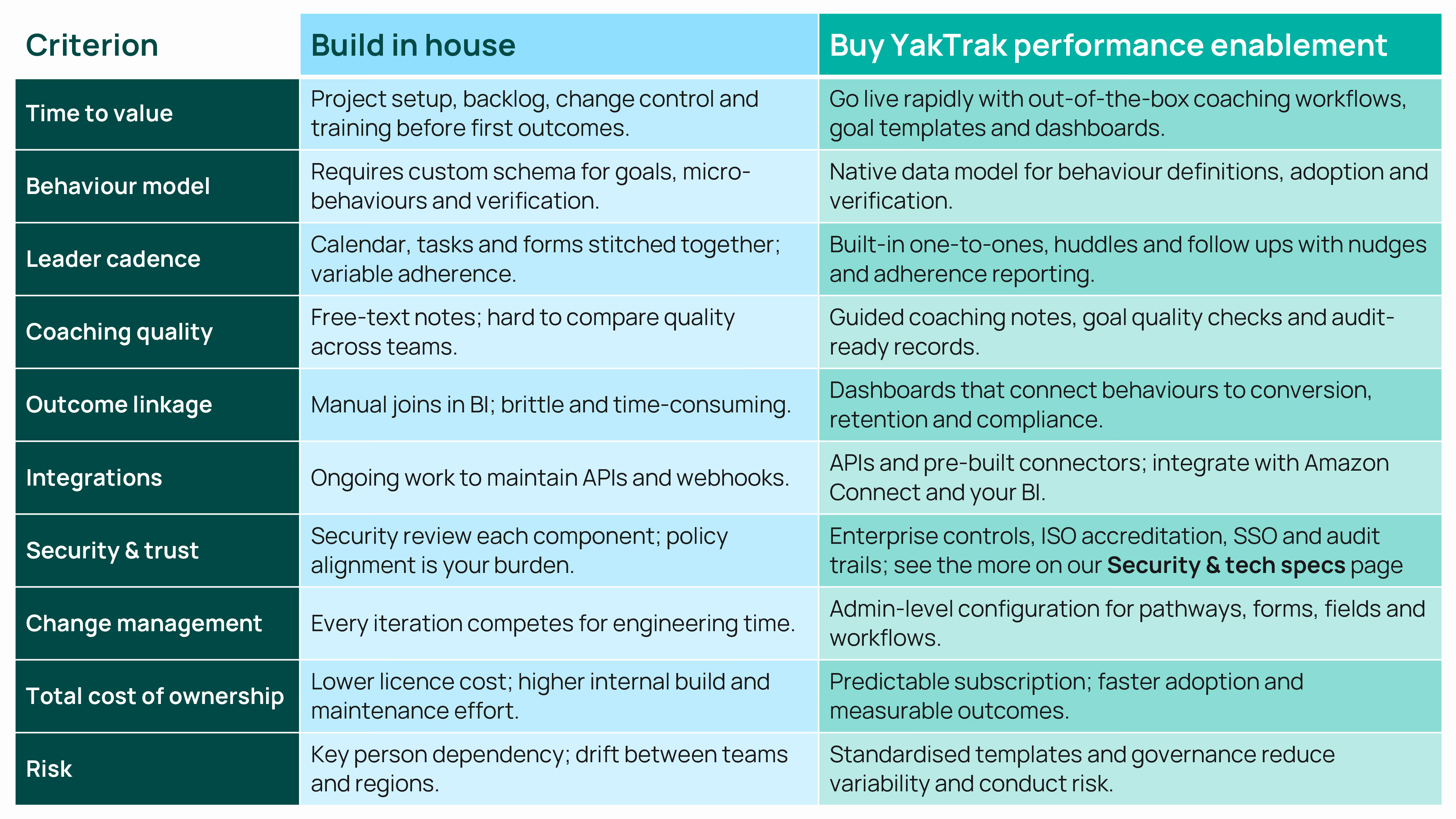
Build vs buy scorecard
Use this table to test options against your requirements. Score 1–5 for each row and total your results.
Enterprise readiness: what IT needs to sign off
- Security and privacy
SSO, role-based access, regional hosting options and audit trails for every coaching interaction. - APIs and integration
REST APIs and web hooks to pull behaviour and outcome data into your warehouse; options to integrate with Amazon Connect and other contact centre platforms. - Data lineage
Clear traceability from interaction insight to behaviour goal, owner, coaching notes, verification and outcome. - Scalability
Multi-region teams, configurable forms and fields, and admin tooling that doesn’t require code. - Reporting
Capability dashboards designed for coaching analytics, not just activity counts.

Where build typically stalls (and how to de-risk it)
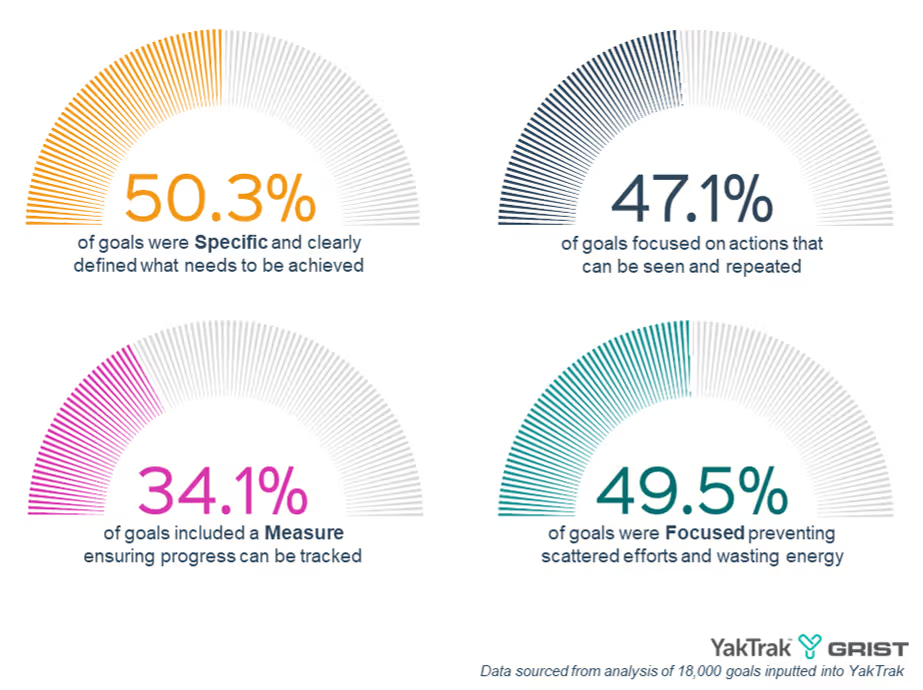
1) Goal quality and behaviour definitions.
Without shared definitions, teams create inconsistent targets. YakTrak provides goal quality standards and libraries for common micro-behaviours (for example, summarise customer need; confirm next step), avoiding drift.
2) Coaching cadence and adoption.
Calendars, tasks and spreadsheets don’t enforce rhythm. YakTrak schedules one-to-ones and huddles, nudges leaders, and reports adherence so coaching actually happens.
3) Coaching notes and auditability.
Free-text notes vary in usefulness and are hard to audit. YakTrak guided notes capture the right details and create a clean audit trail.
4) Linking to outcomes.
Joining notes, goals and CRM outcomes in BI is complex and fragile. YakTrak’s behaviour model ties practice to conversion, retention and compliance at the source.
5) Time-to-competence.
Building workflows, training leaders and iterating takes months. YakTrak accelerates onboarding with templates, playbooks and YakTrak-powered AI prompts that help leaders start strong.
What “buy” looks like in practice
For leaders
- Clear agenda for one-to-ones and side-by-sides.
- High-quality coaching notes in minutes.
- Small, specific goals tied to micro-behaviours.
- Nudges to re-check and sign off when the behaviour sticks.
For agents
- Simple, focused goals aligned to outcomes.
- Short experiments they can try in live calls with quick feedback.
- Confidence from clear expectations and progress visibility.
For execs and IT
- Real-time coaching analytics and capability dashboards.
- Data lineage and audit trails you can trust.
- APIs for your warehouse and BI models.
- Less tool sprawl; more system of application.
Time to value and outcomes you can measure
Because YakTrak starts with behaviour definitions and leader rhythm, you see movement in leading indicators quickly:
- Conversion: micro-behaviours like “front-load discovery” and “confirm next step” support cleaner sales conversations.
- Retention: behaviours like “probe for save triggers” and “value re-cap” reduce churn contributors.
- Compliance: audit-ready coaching notes and sign-offs reduce repeat issues.
Use the platform to test and scale what works, creating faster, smarter pathways from insight to outcome.

When building can still make sense
- You already have a bespoke workflow engine with strong internal product ownership.
- Your risk profile allows slower time-to-value in exchange for full customisation.
- Your behaviours, cadences and data model are simple and unlikely to evolve.
If none of these are true, buying a platform that is purpose-built for behaviour change and coaching quality will reduce risk and accelerate impact.
Ready to make a confident decision?
Book a strategy session and we’ll run a build-vs-buy workshop with your team: scorecard, security and integration review, and an adoption plan mapped to your conversion, retention and compliance goals.
Frequently asked questions
Got questions? These FAQs explain what YakTrak is, how it fits, and the outcomes to expect so you can choose the right pathway with confidence.
Start with the mechanism, not the promise. Look at whether your option can define micro behaviours, embed cadence, support structured coaching, verify practice and connect behaviours to outcomes. Then compare time to value, integration effort, security and total cost using a simple build vs buy scorecard.
It means every coaching goal and note is tied to a specific micro behaviour with an ID, examples and evidence. This makes it easier to measure adoption, track leader cadence and connect behaviour trends to conversion, retention or compliance without stitching together multiple systems.
Inconsistent behaviour definitions, weak cadence, free text notes, difficulty linking coaching to outcomes and long time to competence for leaders. Many teams try to stitch forms, tasks and BI together, but gaps appear when they need lineage, auditability or proof of behaviour change.
Leaders get one to one agendas, guided notes, nudges and clear practice commitments. They spend less time piecing together tools and more time coaching. They can also see adoption, verification and cadence across their team, reducing mental load and uncertainty.
Micro behaviours describe the specific actions that tend to shift a metric---for example "front load discovery" before a sales offer or "value re cap" in save conversations. Tracking adoption and quality helps teams see where those behaviours appear and how they relate to movement in outcomes.
IT needs confidence in security, SSO, APIs, hosting and audit trails, plus a data model that offers full lineage from behaviour definition to coaching event to outcome. They also look for admin level configuration so teams are not dependent on engineering for small changes.
Yes---if you already have a strong workflow engine, clear product ownership and stable coaching routines. But for most centres, a buy approach reduces risk, speeds adoption and provides consistent operating rhythms leaders can run without extra overhead.
Ready to Start Your Pathway?
Ready to move from ideas to results? Pick a quick demo to see workflows, or a discovery call to discuss your challenges. We’ll tailor the pathway.