ACDC coaching: the practical coaching model leaders can run every week

ACDC gives contact centre leaders a practical way to move from coaching conversations to behaviour change in real work.
Here, we look at how ACDC compares with GROW, when each model is most useful, and why short application cycles suit busy contact centre environments. The article explains how micro-behaviours, goal quality, operating rhythms and evidence capture help leaders coach with more consistency. The practical takeaway is that ACDC works best when leaders focus on one behaviour, one commitment and clear proof of action.
The problem
You need better outcomes without burning people out. Training often lands well, then practice fades. 1:1s tend to drift into friendly chats, action items get lost, and it becomes hard to show which behaviours actually shifted the metric. Ramps vary by team, repeat contacts creep up, and policy‑risk moments get missed. Most teams want one practical coaching methodology that creates visibility, transparency and accountability across leaders, vendors and sites — and reduces the mental load for everyone.
GROW vs ACDC: when to use each model
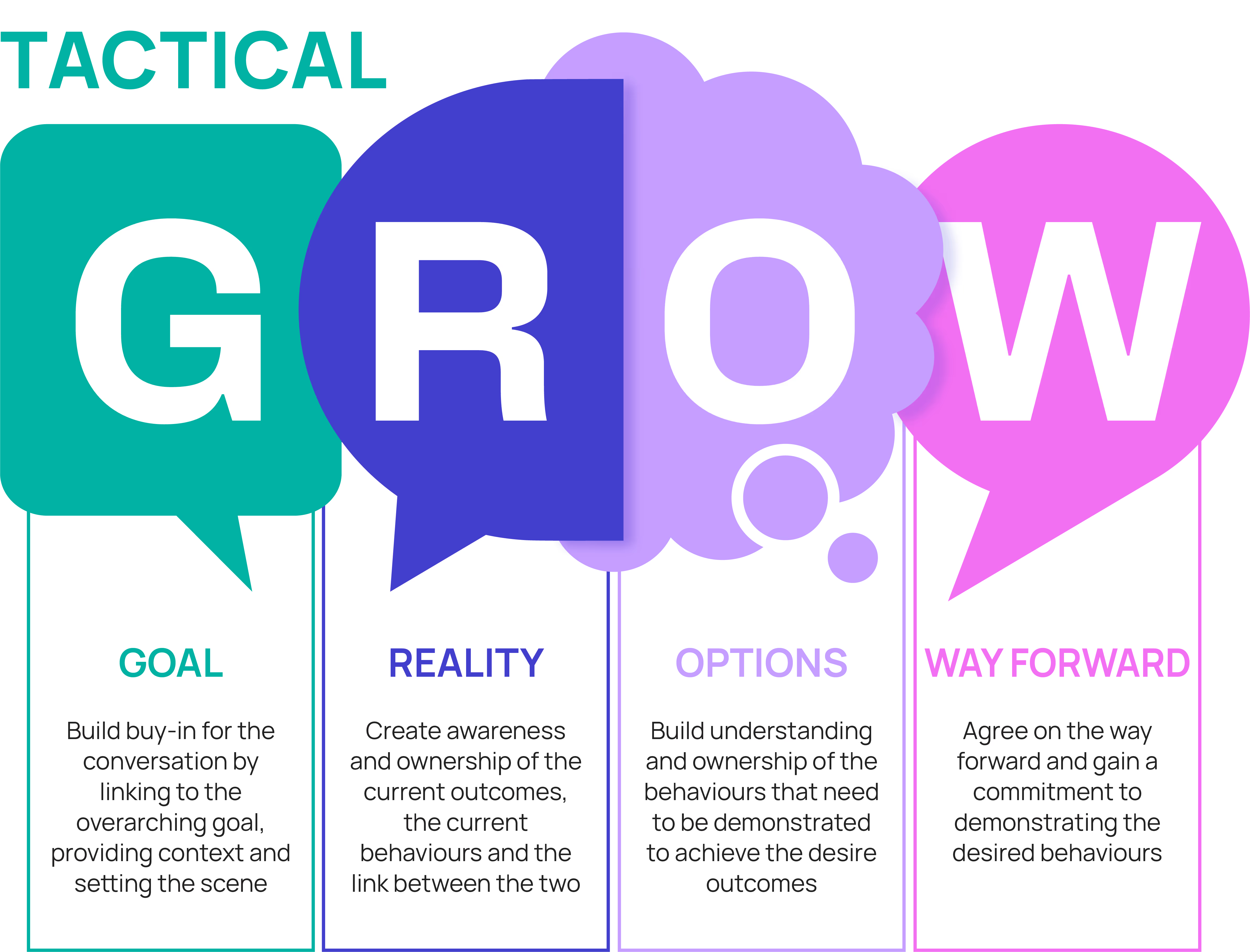
GROW helps teams step back and think:
- Goal: what you want
- Reality: what is happening now
- Options: what you could try
- Will: what you will do
.avif)
ACDC turns that intent into practice inside real work. It was built for contact centres, where leaders need a short application cycle that fits busy shifts and produces evidence the next day.
- Agenda: pick one capability and a few micro‑behaviours
- Current state: tag what you can hear in a recent call
- Desired state: define what good sounds like
- Commitment: write a small, time‑bound practice commitment and plan the review
Use GROW for broader development or career planning. Use ACDC for performance in the flow of work. Together they make the pathway from thinking → doing easier to follow.
Explore the ACDC coaching model here.
Why ACDC works in contact centres
ACDC works well when teams need short, focused 1:1s that lead to action the very next shift. Small, specific goals fit real calls and sit within the agent’s control. Frequent reps build fluency faster than long sessions once a quarter. Tagged behaviours replace opinion with observable evidence. Shared language means teams coach to the same standard across leaders and vendors.
This is how we create faster, smarter pathways from coaching talk to measurable results.
Read a customer story that shows coaching turning into outcomes.
The ACDC loop leaders can run in 15 to 30 minutes
- Agenda
Pick one capability that matters to the scorecard this week, for example reducing repeat contacts. Name two or three micro‑behaviours you can hear in calls, such as one‑sentence frame, probe‑then‑confirm, clean confirm‑close. - Current state
Listen to a recent call. Tag which micro‑behaviours were used, missed or inconsistent. Keep it objective. - Desired state
Define what good sounds like in your context. Write the exact words or actions. Practise one example line together. - Commitment
Set one small, time‑bound practice commitment for the next shift and choose the evidence to bring back, such as two call IDs.
YakTrak: how the platform embeds ACDC every week
YakTrak works so teams can engage–design–deliver–sustain the coaching rhythm with less mental load. YakTrak-powered AI, supports analysis of patterns, not replacing leaders.
Define what good looks and sounds like
Translate capabilities into observable, repeatable micro‑behaviours that sit in the person’s control.
Embed the operating rhythm
Schedule weekly ACDC 1:1s, two short huddles and a quick end‑of‑week review. Prompts keep the focus and frequency consistent.
Act on the signal
Notes, goals and examples are summarised so leaders can see patterns and choose the next small step.
Equip leaders
Goal‑quality checks, examples and nudges make it easier to hold the standard, even in busy weeks.
Link to outcomes
Behavioural data connects to AHT, FCR, NPS, conversion, retention and compliance so you can show impact and scale what works. Compliance evidence includes audit trails, sign‑offs and role‑based access.
If QA or speech analytics surface an issue, convert it into one ACDC goal, assign an owner and track proof of action. If you use Amazon Connect Contact Lens, explore our integrations.
Explore the performance enablement platform for multi-site operations.
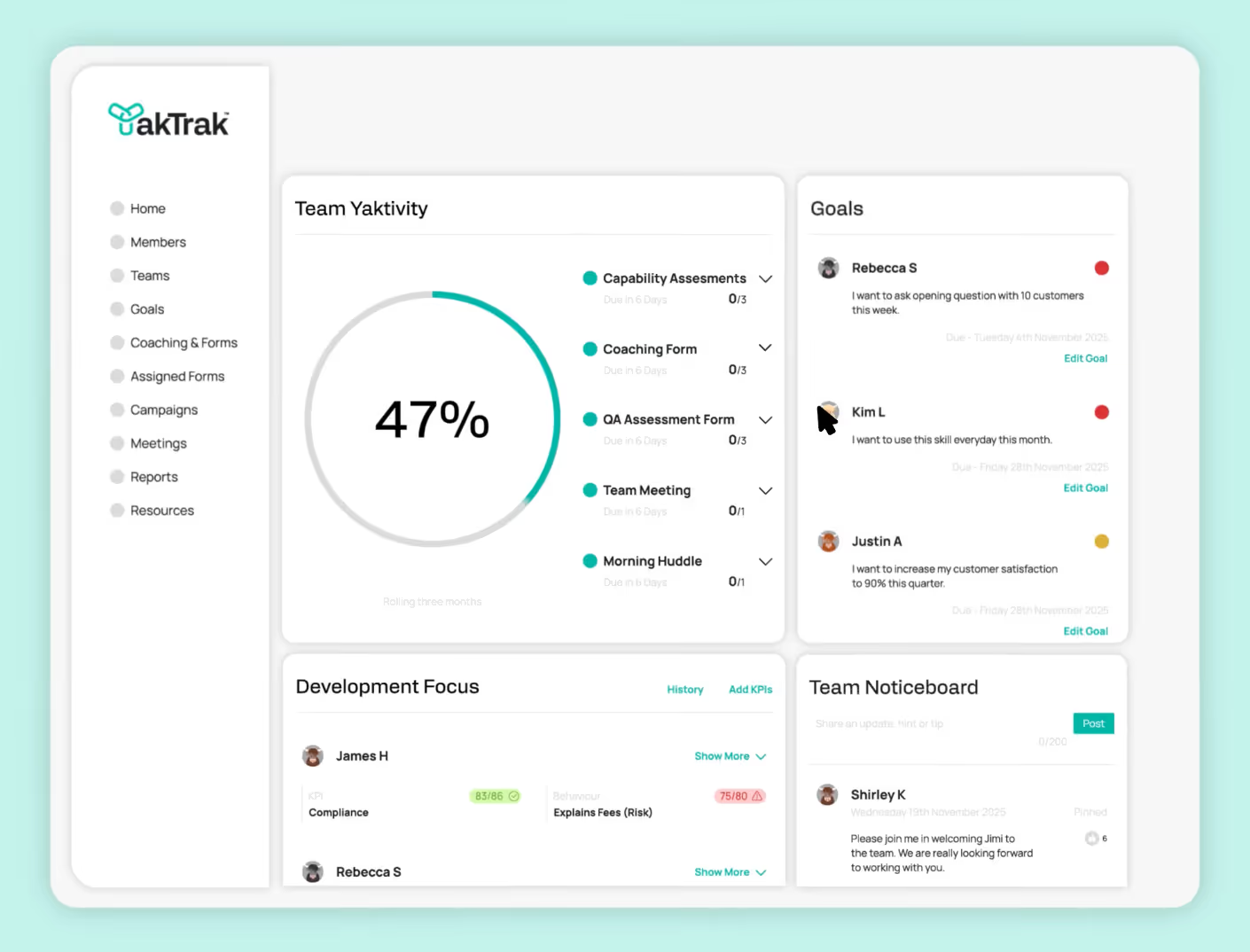
Behaviours to metrics: make the line of sight explicit
- AHT: one‑sentence frame and clear next steps reduce handle and wrap.
- FCR: probe‑then‑confirm and a clean confirm‑close reduce repeat contacts.
- NPS: acknowledge and assure early; summarise the plan and owner.
- Conversion: link value to the stated need and ask one clean check question.
- Retention: fair, consistent coaching and visible progress help stabilise cohorts.
- Compliance: risk‑critical behaviours are defined, practised and evidenced.
A 30 to 60 to 90 day plan to roll out ACDC
Use this plan for new or existing teams. The short cadence helps it survive real life.
Days 1 to 30: clarity and quick wins
- Focus: open and close of the call.
- Micro‑behaviours: one‑sentence frame; probe‑then‑confirm; confirm‑close.
- Leader routines: weekly ACDC; two huddles sharing one snippet and one tip; end‑of‑week yes/no review on the goal.
- Expected movement: AHT stability and early FCR improvement.
Days 31 to 60: consistency and blockers
- Focus: reduce rework and lift empathy without adding time.
- Micro‑behaviours: acknowledge‑and‑assure; check understanding; confirm‑close.
- Leader routines: keep the coaching cadence; log one blocker per team and remove it.
- Expected movement: FCR lifts and NPS improves as friction falls.
Days 61 to 90: complexity and value
- Focus: policy nuance, value linking and risk steps.
- Micro‑behaviours: explain the why in plain language; offer a relevant add‑on; follow risk‑critical script and check understanding.
- Leader routines: rotate scenarios; collect call IDs; decide to continue, extend or advance.
- Expected movement: conversion tends to lift; compliance evidence becomes consistent; retention stabilises as confidence grows.

Practical ACDC plays leaders can use this week
Use these as plug‑and‑play goals and adapt the cues to your brand voice.
Play 1: Start‑of‑call frame
- Cue: “I can help with X and then confirm Y.”
- Why it matters: sets control and reduces handle.
- ACDC goal: use on every call for three days; save two examples.
Play 2: Probe then confirm
- Cue: “So the main issue is X, is that right?”
- Why it matters: resolves the real need; cuts rework.
- ACDC goal: five calls; log two call IDs.
Play 3: Confirm‑close
- Cue: “Today we will do X and you will Y by Friday. Does that work?”
- Why it matters: prevents repeat contacts; supports compliance.
- ACDC goal: end every qualifying call with confirm‑close this week.
Play 4: Empathy early
- Cue: “I can see how that would be frustrating. Let’s fix it now.”
- Why it matters: lifts NPS without adding time.
- ACDC goal: apply on three calls per shift; capture one example.
Play 5: Policy in plain language
- Cue: “Here is the why in simple terms.”
- Why it matters: reduces escalations and protects trust.
- ACDC goal: one policy explanation per day; peer review one example.
Play 6: Value‑link micro‑offer
- Cue: “Based on what you’ve said, X will save you Y.”
- Why it matters: grows conversion without pressure.
- ACDC goal: two suitable offers this week; reflect in huddle.
Common pitfalls and how to avoid them
- Vague goals → Name the micro‑behaviour and where it will be used.
- Too many focus areas → One capability per week; two or three micro‑behaviours.
- Opinion‑based feedback → Use recent calls and tag what you can hear.
- Coaching pauses in busy weeks → Keep ACDC to 15–30 minutes; use prompts.
- No line to metrics → Connect each goal to AHT, FCR, NPS, conversion, retention or compliance.
See how YakTrak embeds ACDC into weekly coaching practice
Book a demo to explore the live pathway, examples and reporting that connect coaching practice to AHT, FCR and NPS.
Frequently asked questions
Got questions? These FAQs explain what YakTrak is, how it fits, and the outcomes to expect so you can choose the right pathway with confidence.
GROW helps teams think through goals and options, while ACDC turns that intent into small, observable micro behaviours applied in real calls. Many teams use GROW monthly for development and ACDC weekly to build habits that shift AHT, FCR and NPS with clearer visibility and accountability.
ACDC goals work best when they name the exact micro behaviour, where it will be used, and what evidence the agent will bring back. For example: "Use one sentence frame on every call for three days and save two examples." Clear scope makes the review faster and more objective.
They mainly need a clear definition of what "good" sounds like and a simple coaching rhythm. The platform supports this with prompts, examples and goal quality checks, so leaders can coach consistently even when they aren't technical experts in the topic.
It varies by environment, but many teams see early movement in AHT and NPS in the first 30 days when micro behaviours are practised daily and reviewed weekly. Consistency in focus, frequency and quality tends to strengthen results across the 60--90 day window.
YakTrak makes the operating rhythm visible --- who is coaching whom, how often and on what --- and reduces the mental load with prompts, reminders and summaries of tagged behaviours. This helps teams sustain the cadence even during busy weeks and keeps coaching anchored to evidence.
Each micro behaviour connects to a known outcome: framing reduces handle, probe then confirm supports FCR, early empathy lifts NPS, and plain language policy steps protect compliance. Behavioural evidence is tied to associated metrics so leaders can see what is working and where teams need more support.
Compliance is strengthened by defining risk critical behaviours, practising them regularly and capturing evidence through audit trails, sign offs and role based access. This makes it easier to show what was coached, what was applied and where further support is needed.
Ready to Start Your Pathway?
Ready to move from ideas to results? Pick a quick demo to see workflows, or a discovery call to discuss your challenges. We’ll tailor the pathway.