70:20:10 that actually changes behaviour

70:20:10 works best when the on-the-job component is clear, visible and easy for leaders to run every week.
Here, we look at how micro-behaviours, ACDC coaching, huddles and operating rhythms help turn learning into daily practice. The article explains how the 70, 20 and 10 can work together to connect formal training, peer reinforcement and real call application to outcomes such as AHT, FCR, NPS, conversion, retention and compliance.
The problem
Most L&D teams believe in the 70:20:10 methodology, but the 70 often stays unclear. Workshops land well, then application tends to fade. Leaders miss 1:1s, examples are scattered, and it becomes hard to show which behaviours are lifting or dragging AHT, FCR, NPS or retention. What’s usually needed is a practical way to operationalise the model with visibility, transparency and accountability across teams and vendors.
How we operationalise 70:20:10 with YakTrak
We bring together behavioural psychology with the YakTrak performance enablement platform (with YakTrak-powered AI) so a simple weekly rhythm drives daily practice, not one-off training.
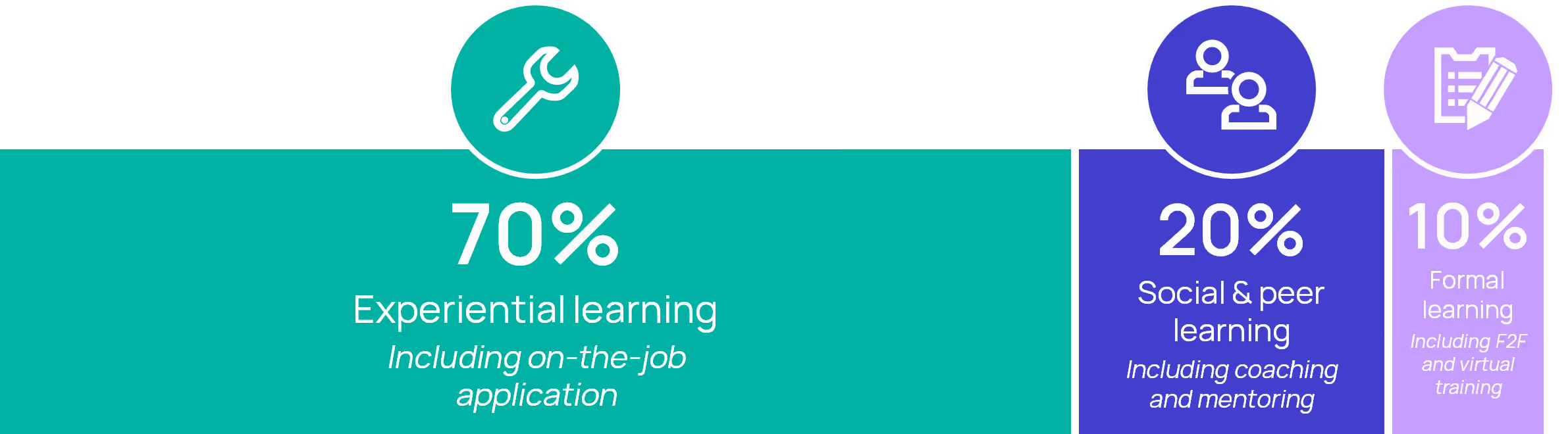
70 on-the-job
We define micro-behaviours for key call moments—small, observable actions teams can use in real conversations. Leaders use ACDC coaching for 15 to 30 minutes to agree one small practice goal that will be applied in the next shift.
20 social
Team huddles share quick wins and patterns. Leaders surface examples, tighten language and agree the next practice focus.
10 formal
Training introduces the concepts. YakTrak then anchors those concepts to observable behaviours and prompts leaders to translate them into on-shift action.
This approach tends to create faster, smarter pathways from learning to measurable results.
Example
If the priority is reducing repeat contacts, the 10 introduces the concept, the 20 reinforces examples in huddles, and the 70 happens when agents practise confirm-close behaviours in live calls and leaders verify the evidence.
Explore how operating rhythms make the 70 visible and repeatable.
What makes our 70:20:10 approach different
- System of application
Micro-behaviours and operating rhythms are built into the week, so people practise specific actions rather than only learning about them. - Leader-first enablement
Examples, goal-quality checks and prompts help leaders maintain focus, frequency and quality in coaching, even across large or vendor-led environments. - Line of sight to outcomes
Behavioural data links to AHT, FCR, NPS, conversion, retention and compliance. This tends to make impact easier to see and helps teams scale what works. - Enterprise-ready
ISO-aligned controls, privacy settings, SSO, APIs and audit trails support regulated contact centres where assurance and transparency matter.
Read how purposeful experimentation turned on-the-job practice into $951.5m in FUM growth.
What this means for your scorecard
When 70:20:10 is run with a clear operating rhythm:
- AHT
Concise framing and simple call control help reduce handle and wrap. - FCR
Probing for real need and confirm–close actions tend to cut repeat contacts. - NPS
Empathy, ownership and clear next steps usually lift trust and reduce perceived effort. - Conversion
Needs-based questions and value-linking often lift close rates. - Retention
Fair, consistent coaching and visible progress tend to stabilise teams. - Compliance
Risk-critical behaviours are defined, practised and evidenced through clean audit trails.
Getting started next week
Here’s a simple way to bring the 70 to life next week:
- Pick one capability tied to a priority, such as reducing repeat contacts.
- Define two or three micro-behaviours you can hear on calls.
- Run ACDC coaching for 15 to 30 minutes to set one small practice goal.
- Reinforce it in two huddles using peer examples and short tips.
- Review on Friday and decide whether to continue, extend or advance the behaviours.
YakTrak keeps the rhythm visible and the evidence clean so L&D and operations share the same view of progress.
Plan how to operationalise 70:20:10 in your environment
Book a strategy session to map the capabilities, define the micro-behaviours and set an operating rhythm your leaders can run next week.
Frequently asked questions
Got questions? These FAQs explain what YakTrak is, how it fits, and the outcomes to expect so you can choose the right pathway with confidence.
It usually means teams practise small, observable micro-behaviours in real calls, leaders run short ACDC coaching conversations, and weekly huddles reinforce language and examples. YakTrak provides visibility into who's practising, how often, and the effect on measures like AHT, FCR and NPS.
Micro-behaviours break broad skills into actions you can hear on a call---such as probing for need or confirming next steps. Leaders coach to these cues, teams practise them on shift, and the platform shows whether they're being applied and how they relate to operational outcomes.
Many teams use a simple weekly cadence: one small practice commitment through ACDC coaching, huddle reinforcement mid-week, and a short Friday review. This rhythm keeps focus tight, reduces leader load and helps learning carry into real conversations.
YakTrak connects behavioural data to scorecard metrics like AHT, FCR, NPS, conversion and retention. This makes patterns visible---whether a specific framing behaviour reduces handle time, or whether confirm--close steps cut repeat contacts.
Risk-critical micro-behaviours are defined, practised and captured as part of standard coaching and goal-setting. Audit trails, sign-offs and role-based access help teams demonstrate control, making assurance conversations simpler and more transparent.
Most centres start with one priority area---such as reducing repeat contacts---and build two or three micro-behaviours around it. Leaders run one ACDC session to set a practice goal, reinforce it in huddles, and review progress at week's end.
Training introduces concepts, but the platform anchors them in application. It shows what's being practised, the quality of coaching and how behaviours map to results, reducing mental load for leaders and giving L&D and operations a shared view.
Ready to Start Your Pathway?
Ready to move from ideas to results? Pick a quick demo to see workflows, or a discovery call to discuss your challenges. We’ll tailor the pathway.